“No Expert”: FOIA Emails Reveal PESP Staffers Lack Expertise They’ve Claimed for Years
Posted: Mar 9, 2026
The Point
Mar. 9, 2026
Highlights:
- Emails obtained through Freedom of Information Act (FOIA) show Private Equity Stakeholder Project (PESP) staffers admitting they are “no expert” on a key legislative policy issue, despite authoring reports, testifying to lawmakers, and advising on legislation in that exact area.
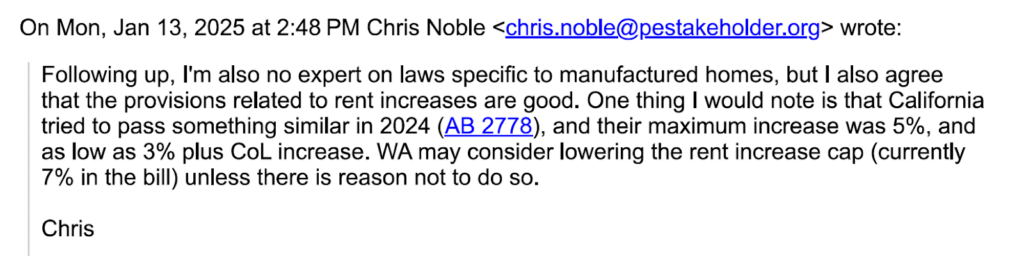
- PESP Policy Director Chris Noble said he was “no expert on laws specific to manufactured homes” but has testified to the Connecticut General Assembly on manufactured housing and co-authored reports on the topic.
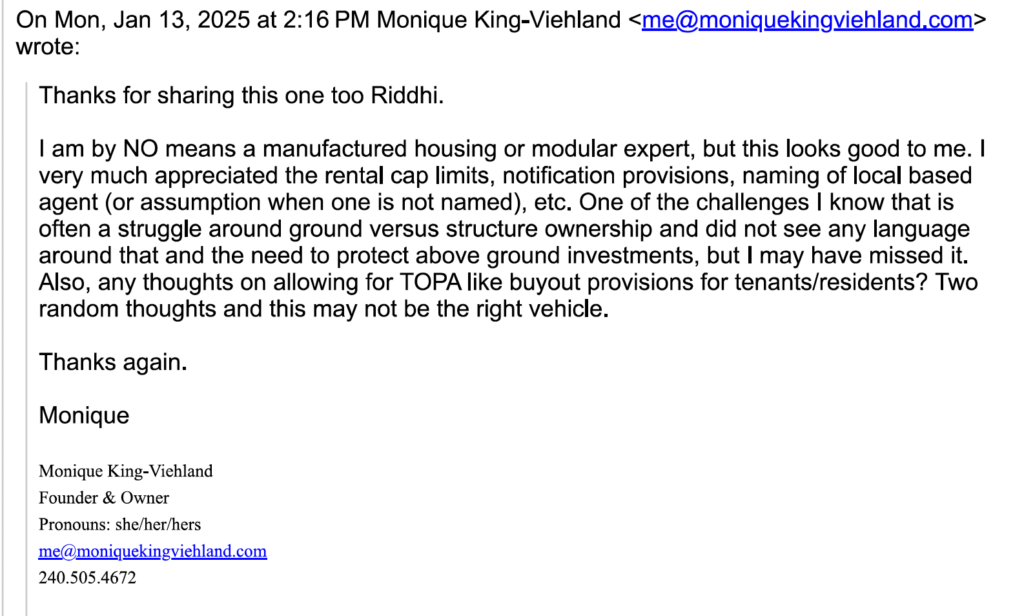
- Advisory Council Member Monique King-Viehland claimed to be “by NO means a manufactured housing or modular expert” despite contributing to government housing policies and spending much of her career in housing policy.
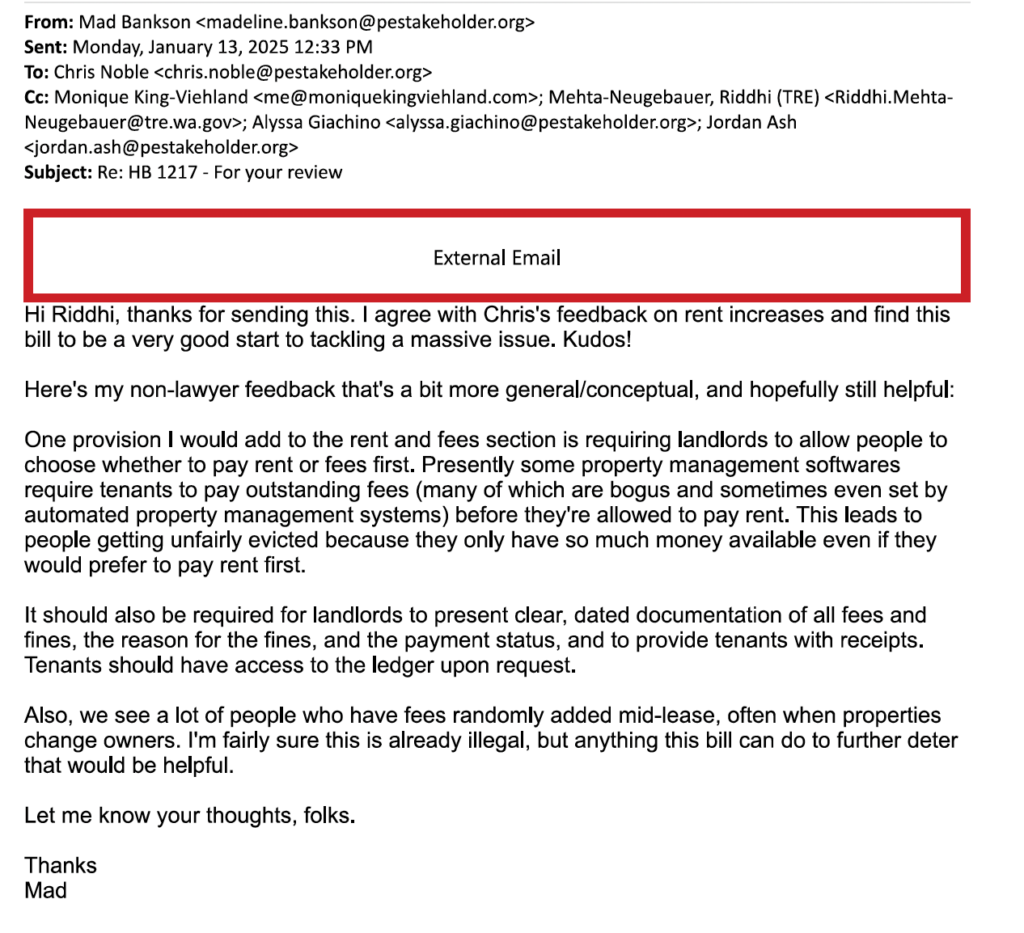
- Senior Research Coordinator Madeline Bankson gave her “non-lawyer feedback” on housing legislation while being quoted as an expert in multiple news outlets and authoring numerous reports on manufactured housing.
- These candid admissions call into question the validity and credibility of PESP’s research, which has been widely presented to legislative bodies and media as the work of “experts.”
The Private Equity Stakeholder Project (PESP) positions itself as an authoritative voice on housing policy, but emails obtained through public records requests tell a different story. When asked to weigh in on Washington State legislation affecting manufactured housing, three key PESP figures, Policy Director Chris Noble, Advisory Council Member Monique King-Viehland, and Senior Research & Campaign Coordinator Madeline Bankson, all admitted they lacked expertise in the very subject matter they’ve been publicly advising on for years. Their candid confessions raise serious questions about PESP’s credibility.
The FOIA Emails: Admitting What They Won’t Say Publicly
In January 2025, Riddhi Mehta-Neugebauer, a former PESP staffer who went on to serve as ESG Advisor in the Washington State Treasurer’s office, reached out to current PESP staff for feedback on Rep. Emily Alvarado’s Housing Bill, HB 1217, which included language specifically related to manufactured housing and mobile homes.
Monique King-Viehland, named to PESP’s inaugural Advisory Board in May 2025, responded that she was “by NO means a manufactured housing or modular expert.” Despite this disclaimer, she proceeded to suggest specific legislative language the bill should include regarding ground versus structure ownership.
Chris Noble, PESP’s Policy Director, stated he was “no expert on laws specific to manufactured homes” but still thought the “provisions related to rent increases are good.” He went on to suggest lowering the maximum rent increase cap, citing California legislation that capped it at 3-5%.
Madeline (Mad) Bankson, PESP’s Senior Research & Campaign Coordinator for Housing, offered what she called her “non-lawyer feedback” on the bill’s general framing, recommending specific requirements for landlords regarding fee documentation and payment procedures.
Mehta-Neugebauer went on to thank them all for their “thoughtful feedback” and HB 1217 became law in Washington State in May 2025.
The Problem: They’ve Been Presenting Themselves As Experts For Years
Ordinarily, these admissions wouldn’t raise eyebrows, but all three individuals have positioned themselves as experts on manufactured housing policy. PESP hasn’t just dabbled in manufactured housing issues, it’s made them a core part of its advocacy work. PESP maintains a Private Equity Manufactured Housing Tracker as a permanent resource on its website, has collaborated with Manufactured Housing Action to lobby on legislation in Michigan that would affect manufactured housing, and has published multiple reports and blog posts positioning itself as a leading authority on private equity’s role in the manufactured housing market. Yet when it came time to provide input on actual legislation, the organization’s key staff admitted they weren’t experts.
Despite admitting he’s “no expert on laws specific to manufactured homes,” Chris Noble has:
- Testified to the Connecticut General Assembly in February 2025 that private equity firms were buying up manufactured homes, stating: “In recent years, private equity firms have significantly increased their presence in the housing market…by purchasing large volumes of single-family homes, apartment complexes, and manufactured housing communities.”
- Co-authored a report with Bankson that included an entire section about manufactured housing legislation.
- Overseen PESP’s Private Equity Manufactured Housing Tracker, a database maintained on PESP’s website.
- Issued public statements in 2024 supporting federal underserved market plans for manufactured housing.
Madeline Bankson offered her “non-lawyer feedback” on housing legislation, but has been positioned as an expert by both PESP and major media outlets:
- Quoted in NBC News in November 2024, where she claimed: “We have recently seen private equity enter the manufactured housing market. And what we typically see is that they often raise rents significantly, we also see a lot of issues that residents report due to maintenance problems.”
- Quoted in NBC News in January 2024 in an article titled “Wall Street’s growing housing stock prices out Latino rents, buyers,” where she stated: “Corporate landlords tend to invest in areas where they believe demand will increase so they can charge higher rents.”
- Co-authored “Vulture Wars: Alden Global Capital’s Assault on Manufactured Housing Residents” with PESP Housing Director Jordan Ash in September 2024.
- Published multiple PESP blog posts on manufactured housing topics, including pieces on RHP Properties filing evictions in North Carolina after Hurricane Helene, and Alden Global Capital’s conviction for violating the Michigan Mobile Home Commission Act.
- Co-authored a December 2023 report with Chris Noble titled “Combatting Consolidation Through Pro-Competitive Policy Reforms,” which stated: “Private equity firms and large corporate landlords are quickly acquiring housing, increasingly consolidating America’s housing stock…This is true across housing types, with investors expanding ever further into…manufactured housing (mobile homes).”
Monique King-Viehland claimed to be “by NO means a manufactured housing or modular expert,” yet she has:
- Contributed to the Metropolitan Washington Regional Fair Housing Plan adopted by Arlington County, Virginia in July 2023, which included specific provisions on manufactured housing preservation and policy recommendations.
- Provided similar contributions to the Fairfax County, Virginia Regional Fair Housing Plan adopted in November 2023, which updated definitions of manufactured homes and outlined where they could be permitted.
- Spent much of her career in housing policy roles, including serving as Los Angeles County Development Authority Director from 2015 to 2019. During her tenure, homelessness in Los Angeles County increased more than 32% to nearly 59,000 people, despite the agency increasing affordable and supportive housing units ten-fold, according to the Los Angeles Daily News.
Notably, King-Viehland is no longer listed on PESP’s Advisory Council webpage as of August 2025, just two months after being named to the inaugural board.
The Credibility Gap
These emails reveal what PESP won’t say publicly: when the people producing the research, testifying before legislative bodies, and advising on legislation admit privately that they’re not experts, it undermines everything built on that supposed expertise. The question isn’t whether Noble, King-Viehland, and Bankson are allowed to have opinions. It’s whether they should be presented, and should present themselves, as authorities when they’ve admitted they’re not. PESP campaigns against corporate influence and demands transparency from its targets. Perhaps it’s time to apply those same standards to itself.
More from Pinpoint: