The Point
Broken Compass, Vol. 3: Oren Cass Wants a Tax Increase
February 10, 2026
The “Broken Compass” series continues to examine the policy positions advanced by Oren Cass and American Compass.
This week’s edition examines Cass’s latest fiscal commentary: his explicit call for “more revenue” to address America’s growing deficits and debt. From The New York Times last weekend:
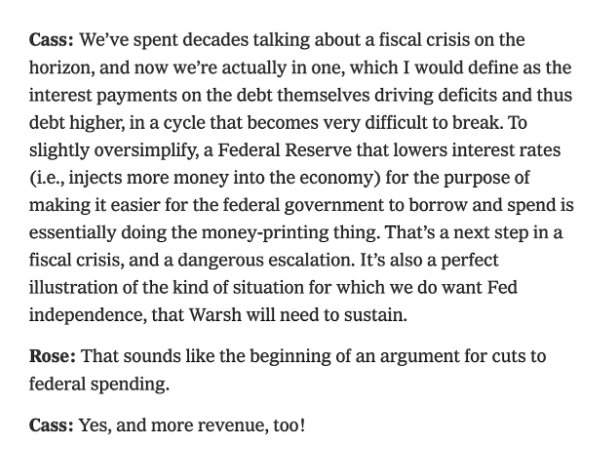
In the online exchange, Cass agrees that cuts to federal spending are necessary, but quickly added: “Yes, and more revenue, too!” This is far from an isolated statement. Cass’s longstanding view has been that addressing deficits requires revenue on top of spending restraint. He has argued that “some amount of new revenue, which means a tax increase in some way is going to have to be part of any way out of this.” American Compass materials and Cass’s public positions consistently frame revenue-raising measures as essential for fiscal responsibility.
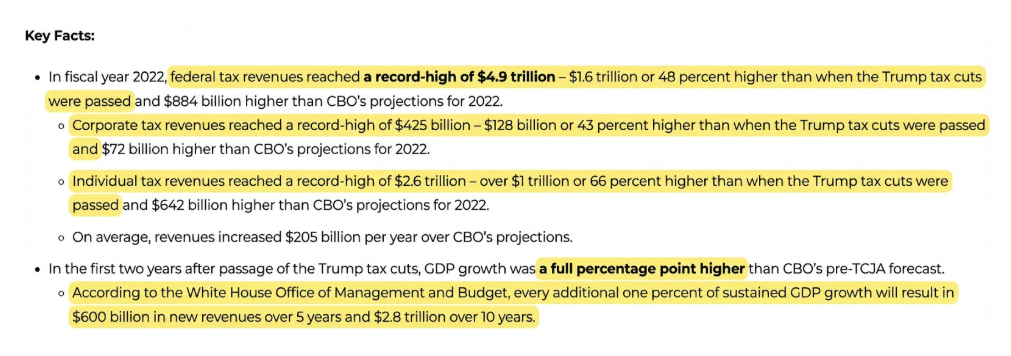
Cass previously dismissed the economic benefits of the Tax Cuts and Jobs Act (President Trump’s signature policy victory in his first term), and supported allowing it to expire, which would have amounted ot a massive tax hike. His revenue-focused approach prioritizes balancing budgets by taking more money out of Americans’ pockets – rather than unleashing growth through lower tax burdens.
And indeed, tax revenue increased after the passage of the 2017 TCJA. In 2024, House Budget Committee Chairman Jodey Arrington (R-TX) and with Ways and Means Committee Chairman Jason Smith (R-MO) noted:
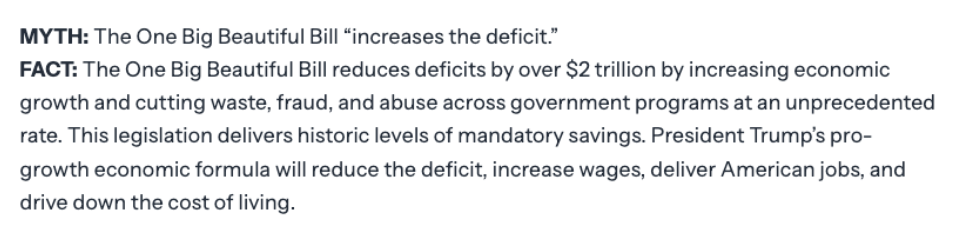
President Trump and Vice President Vance have championed the extension of the TCJA for its role in driving investment, employment, overall economic health – and reducing the deficit. From the White House:
Cass’s focus on “more revenue” amid fiscal challenges reveals his preference for solutions that expand government, rather than market-driven prosperity. The framework of more government funded by an increased burden on taxpayers echoes interventionist policies – rather than a limited government with economic growth.
A principles first, conservative approach, should center on spending discipline and pro-growth policies. The tax provisions of the One Big Beautiful Bill Act take this approach, and not new revenue hikes that burden families and businesses.
More from Pinpoint:
###