
The Point
Reviving the Wealth Tax Fantasy: Why Sanders’ Proposal Misses the Mark
Mar. 4, 2026
This week, Senator Bernie Sanders proposed a new tax that would place an annual 5% wealth tax on billionaires. The plan further promises $4.4 trillion in new entitlement spending over a decade. Here are a few reasons why Bernie’s plan is impractical and makes no fiscal sense:
1. Wealth Taxes Repealed Around the World
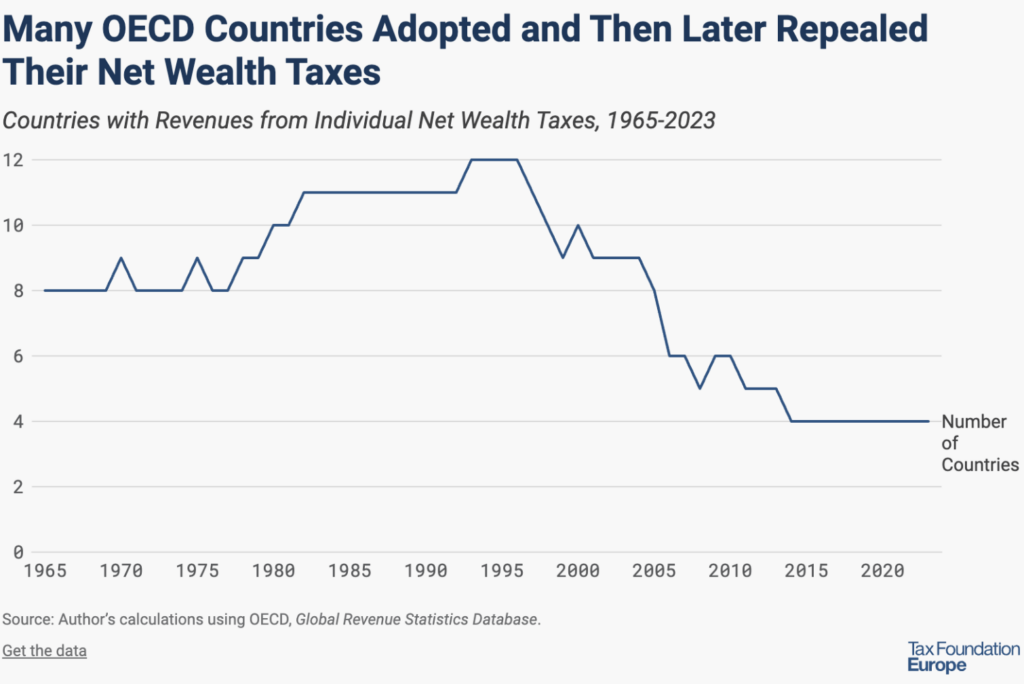
Many countries around the world implemented wealth taxes but largely repealed them after facing chronic evasion, administrative burdens, low revenue yields, and capital flight. These are documented outcomes that distort investment and reduce economic dynamism. Europe’s failed track record will not work in America. As the Tax Foundation recently found:
Many developed countries have repealed these taxes in recent years, including Austria (1994); Denmark and Germany (1997); the Netherlands (2001); Finland, Iceland, and Luxembourg (2006); and Sweden (2007).[3] France was the last country to repeal its wealth tax in 2018, replacing it with a real estate wealth tax.
2. The Revenue Projections Don’t (And Won’t) Hold Up
Billionaires are some of the best-advised individuals when it comes to structuring assets. Behavioral responses will drive capital flight, relocation, and a shrinking tax base – eliminating any possibility of increased revenue. California’s state-level effort to tax billionaires shows that, even before a proposal is enacted, significant wealth and talent have already left the state, cutting state revenue and lost investments.
3. New Spending Amid Exploding Debt Is Reckless
Federal debt already exceeds $38 trillion and is projected to keep rising, with interest costs crowding out other priorities. Creating new entitlements, based on unrealized tax revenues, without reforming current commitments is lunacy. A fiscally-responsible approach would begin by stabilizing existing obligations and eliminating fraud waste and abuse, rather than adding on expansive programs that will compound the problem.
4. Stimulus Checks Now? Timing Couldn’t Be Worse
With unemployment steady at 4.3% and inflation lingering above the Fed’s 2% target at 2.4% annually, broad cash payments would overheat demand and reignite price pressures. This lesson was learned during the pandemic, after the federal government flooded the economy with roughly $5-6 trillion in relief, including nearly $900 billion in direct stimulus checks. Repeating that in a near-full-employment economy repeats the mistake without the crisis.
At the end of the day, Bernie’s wealth tax appears more aimed at establishing a “litmus test” to move the 2028 Democratic presidential primary to the left than advancing serious public policy.