
The Point
WATCH: SEC Commissioner Mark Uyeda Speaks on Implementing President Trump’s Executive Order on 401(k)s and Alternative Assets
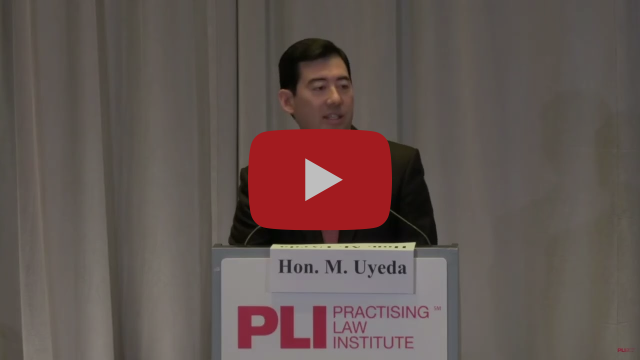
Last week, U.S. Securities and Exchange Commissioner Mark Uyeda, appointed by President Joe Biden in 2022, spoke on the implementation of President Trump’s Executive Order from last summer titled, “Democratizing Access To Alternative Assets for 401(k) Investors Executive Order” at the SEC Speaks Conference, hosted by the Practising Law Institute.
Watch Commissioner Udeya’s comments in full, where he states:
“Until now, the benefits of private market investing have been reserved for institutional investors — the pension funds, endowments, family offices, and sovereign wealth funds — while retail investors saving for retirement have been effectively excluded. The disparity is difficult to ignore.
“The teacher or firefighter whose retirement is managed by a public pension fund has benefited from meaningful private market exposure for years, if not decades. The private sector worker saving through mutual funds in a 401k plan has not.
“In an environment where public market securities are becoming increasingly correlated and concentrated, exclusive reliance on such securities may no longer provide the diversification that retirement savers need and deserve. Private assets such as private equity, private credit, venture capital, infrastructure, and real estate can enhance overall performance returns and reduce volatility when included as part of a diversified portfolio.
“The argument against allowing retail access is familiar. Private investments are illiquid, complex, and sometimes unsuitable for retail investors — but this framing gets the analysis backwards. Retirement savers are often long-term investors, and private investments can offer a premium for that illiquidity. For long-term investors saving for retirement, this trade-off cannot only be acceptable, but desirable.
“The notion that a zero allocation to private assets is somehow inherently safer or more desirable than a diversified allocation is not investor protection. It is not the government’s role to impose its judgment as to what opportunities investors may pursue, particularly when those choices are often being made by a fiduciary.
“The Commission is working to change that. We have already taken steps in that direction, including lifting the 15% cap on investments in private funds for closed-end funds, and we are also actively engaged on how to expand retail investor exposure to private markets. We are working to ensure that the SEC and the Department of Labor are aligned in providing fiduciaries the regulatory clarity and safe harbors they need to prudently include private assets in defined contribution plans — because access alone is not enough if plan sponsors are deterred by litigation that second-guesses good faith decisions with the benefit of hindsight.
“The Declaration of Independence stated that the unalienable rights of life, liberty, and the pursuit of happiness must be secured. In the context of the SEC and the capital markets, that means our role is not to stand between Americans and their economic aspirations in the name of protecting them from themselves.
“Instead, our job is to build and maintain the infrastructure that makes free markets possible — clear rules, honest disclosure, and timely accountability for fraud and manipulation. When we adopt rules, we should ask not only whether they prevent harm, but whether they preserve freedom for investors.
“Capital markets are not perfect, and the cost of capital can increase dramatically in markets that lack rules and safeguards. A free market without proper oversight lacks the tools to prevent and address fraud, insider trading, market manipulation, and market failures such as monopolies that stifle competition. Capital markets will fall far short of their potential if there is a significant lack of transparency and information symmetry, and investors — those persons who put their capital at risk — will simply withdraw.
“However, investor protection does not mean that government ought to engage in paternalistic control. Innovation cannot wait indefinitely for regulators, and we cannot suffocate innovation under the guise of investor protection.
“When the Commission fails to provide workable regulations, markets do not stand still. They will move elsewhere, and when they move elsewhere, investors lose, competition suffers, and the commission’s credibility as a forward-looking regulator is diminished.”
Watch the full speech:
More from Pinpoint:
- New Pinpoint Poll: Americans Overwhelmingly Support Expanding Investment Options in 401(k) Plans
- Pinpoint Comments to House Financial Services Committee: Retirement Investment Options – Should 401(k)s and other retirement vehicles have greater access to private markets, and what safeguards would be necessary?
- Broadening Retirement Choice: Why the Time is Right for Private Equity in 401(k)s
- New Executive Order: Democratizing Investment Options for Retirement Savers
- Pinpoint Policy Institute Applauds President Trump’s Executive Order Expanding Investment Options for Retirement Savers
- Alert: Senators Urge Labor Department to “Expeditiously” Implement New Trump Executive Order Expanding 401(K) Investment Options with Critical Safe Harbor Protections