The Point
The Failed Legacy of Mayor Pete at DOT: How Regulatory Overreach Undermined the Airline Industry, And How Trump is Rolling it Back
The Point
September 15, 2025
- Biden DOT Secretary Pete Buttigieg actively pursued excessive regulations, blocked the JetBlue-Spirit merger and pushed European-style compensation rules that reduced flight options, costing consumers $5.2 billion annually in higher costs.
- Buttigieg failed to do his job – MIA during a supply chain crisis, neglecting critical FAA upgrades and air traffic controller shortages, contributing to a January 2023 NOTAM outage disrupting 11,000 flights, mismanaging $1.2 trillion in infrastructure funds, with a 2023 GAO report highlighting delays that stalled vital transit projects.
- By contrast, now the Trump Administration is rolling back Buttigieg’s mess, supporting airlines as economic partners, fostering competition to lower fares and drive more choices for American consumers.
This week, the Trump Administration made a move to prioritize American consumers and a thriving economy by rolling back excessive fines and burdensome regulations imposed on the airline industry by the Biden-era Department of Transportation (DOT). The misguided overreach of former DOT Secretary Pete Buttigieg threatened consumers, and by reversing course, the White House demonstrated its understanding of how the airline industry actually operates. These actions are in stark contrast to Buttigieg’s tenure, which was marked by performative populism and utter ignorance of the realities of the airline sector, layering on costs that airlines simply couldn’t absorb without passing them straight to passengers.
Performative Populism
Under Buttigieg’s watch, the Biden Administration piled on regulations that ignored the reality of how the airline industry works, all in the name of “protecting” consumers. For example:
- In July 2022, Spirit Airlines sought a merger with JetBlue in an effort to stabilize its operations and create a stronger competitor to larger airlines that would have expanded options and driven down fares. Instead, Buttigieg’s DOT intervened and doomed the merger. The result? Spirit filed for Chapter 11 bankruptcy in late 2024, jeopardizing thousands of jobs and leaving passengers with fewer choices. JetBlue continues to struggle with profitability. Fewer airlines means less competition, which means higher fares for everyone.
- In late 2024, the Biden Administration began probing the rewards programs offered by multiple airlines, seeking to impose government regulations in a program that provides a key source of revenue and help maintain affordable airfare. Buttigieg fined JetBlue and sued Southwest for “chronicle delays” – penalties that cause carriers to schedule fewer flights to avoid violations. Fewer flights reduces supply and drives up prices.
- Buttigieg pursued European-style passenger compensation rules, which would mandate payouts for delays and cancellations. While certain to be popular with impacted fliers, the rules do nothing to actually improve service. In Europe, this regime backfired spectacularly: Cancellations and delays actually increased after implementation, costs per passenger rose by 13.6%, and choices dwindled. An InterVISTAS study projects similar chaos in the U.S., potentially costing passengers $5.2 billion annually in higher fares, reduced service, and more disruptions. Airlines can’t absorb these hits without raising fares—especially when daily operations are at the mercy of uncontrollable factors like weather or air traffic control.
While Buttigieg was actively working to undermine the airline sector through government red tape, he was failing to execute the critical functions of his position, resulting in delays, headaches, and higher costs for consumers.
- Spent $80 billion on DEI grants, while delaying air traffic control updates, neglecting critical upgrades to FAA’s outdated infrastructure, resulting in a mass outage in January 2023, and failed to address air traffic controller shortages, and lowered standards for applicants. The DOT Inspector General wrote a scathing report in 2023 stating that 77% of critical facilities were staffed below threshold, and that the “FAA cannot ensure it will successfully train enough controllers in the short term.”
- While Americans faced supply chain shortages in the 2021 holiday season, Buttigieg was on paternity leave, rather than working on the problem. During the roughly two-month period, Buttigieg avoided phone calls with lawmakers and missed critical negotiations with Congress on an infrastructure bill,
- Fumbled the rollout of infrastructure funding with bureaucratic bottlenecks. A 2023 Government Accountability Office report highlighted that only a fraction of the $1.2 trillion in authorized funds had been disbursed effectively.
Airlines: Textbook Open Market
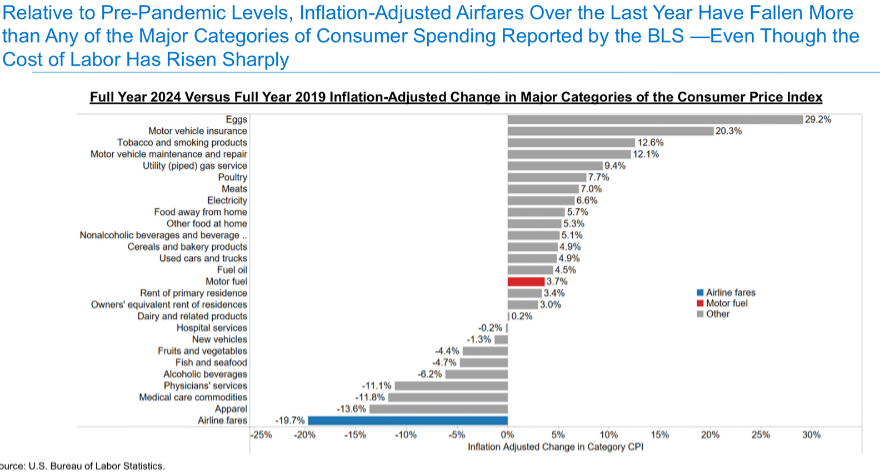
At its core, the U.S. airline industry is a textbook example of an open market with intense competition delivering tangible benefits to consumers. Inflation-adjusted airfare has steadily decreased over the last 30 years, from an average airfare of $627 in 1995 to $397 in 2025. Despite increasing costs for labor, fuel, and infrastructure, as well as years of inflation brought on by Biden economic policies, airfares have hit all-time lows. According to DOT data, average airfares in 2024 were cheaper than in 2019, the pre-pandemic benchmark year for the lowest fares ever. On an inflation-adjusted basis, that’s a staggering nearly 20% drop, and it is the result of intense competition among carriers, giving passengers more options to fly from point A to point B than ever before.
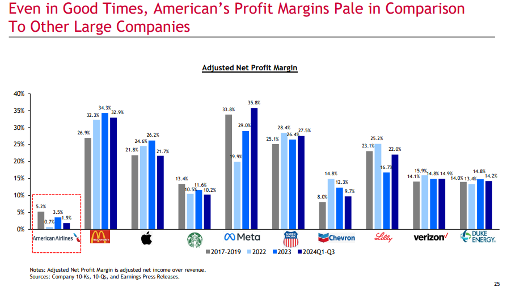
Airlines operate on super-thin profit margins (5.5% in 2024), which pale in comparison to other industries. In this environment, any added regulatory burden isn’t a mere annoyance, it’s a direct threat to affordability.
When “Pro-Consumer” Regulations Backfire Spectacularly
Buttigieg’s airline fiasco is similar to California’s botched approach to insurance regulation, and a cautionary tale of liberals meddling in markets they don’t understand. As the wildfires raged in southern California, we learned that one in ten homeowners lack insurance. The well-meaning rules aimed at curbing premium hikes for wildfire-prone properties have instead driven insurers out of the market. Regulations from the California Department of Insurance impose strict price controls, preventing companies from accurately pricing wildfire risks amid rising costs and reinsurance rates.
As a result, private insurers fled, forcing homeowners into the state’s underfunded FAIR plan, a high-risk pool that is $332 million in debt and not actuarially sound. This would trigger special assessments on the remaining insurers, which they cannot pass on to customers, further squeezing the market. As Noah Smith wrote in his analysis of recent L.A. fires, insurance companies have been “begging California” to allow more flexible pricing, but regulators’ refusal has only worsened the crisis.
Even former Vice President Kamala Harris jumped to blame the insurers. But this misses the point: it is the misguided regulations pushed by liberal bureaucrats that are to blame. California regulators patted themselves on the back for being “pro-consumer,” just like Buttigieg did with airlines. The end result was higher costs, reduced supply, and consumers ultimately losing.
Trump’s Vision for a Competitive Skies
The Trump Administration understands the market dynamics, and deserve significant credit for recognizing airlines as vital economic partners. By rolling back fines and easing overreach, they’re allowing market forces to continue delivering low costs and high value to consumers. Secretary Buttigieg never bothered to grasp these fundamentals, opting instead for headline-grabbing stunts that punished success and ignored economics.
Buttigieg’s legacy will be remembered with failed interventions that liberals who ignore market dynamics risk harming the people they purport to help. Let’s hope this rollback signals a broader shift away from regulatory schemes that put the government before consumers.