
The Point
Why Elizabeth Warren’s American Homeownership Act Misses the Mark on Housing Affordability
This week, over a dozen Senate Democrats including Senator Elizabeth Warren (D-MA) and Senator Jeff Merkley (D-OR) introduced the American Homeownership Act, which aims to strip federal tax deductions, such as those for depreciation and mortgage interest, for large institutional investors and corporations owning more than 50 single-family homes. Proponents argue this will address housing affordability by stopping institutional purchases that supposedly drive up prices.
While this may sound like a win for everyday Americans, it is the same script of government overreach that ignores the root causes of our housing woes. Instead of fostering more supply through deregulation, it will in reality deter the investments that actually help stabilize and improve the housing market.
The Real Role of Institutional Investors
Warren and her colleagues paint institutional investors as predatory forces “snapping up homes in bulk and jacking up rent.” But the data tells a different story. These investors own just a sliver of the single-family housing market (around 3% nationwide), and represent only 0.5% of single-family home sales.
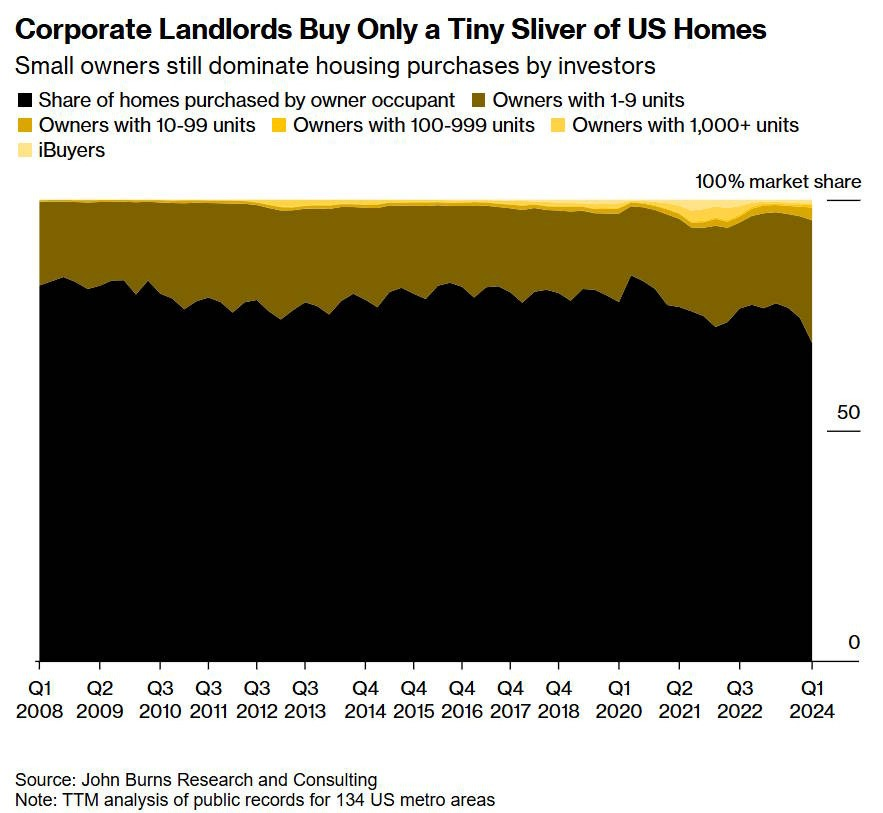
These investors often step in where individual buyers or small landlords won’t by purchasing distressed or outdated homes and rehabilitating them. Research shows they tend to buy homes needing repair, and put in $20,000-$40,000 in investments. This rehab process is a net positive for communities. Institutional investors have the resources to renovate properties, which in turn improves neighborhoods and boosts property values.
Moreover, these firms are increasingly involved in “build-to-rent” strategies, constructing new single-family rentals that add to the overall supply, inventory that is desperately needed amid a national shortage of over 6 million affordable homes. This proposal would have the effect of chilling investment, leading to less new construction, fewer renovations, and ultimately higher prices due to tighter supply.
In the end, Warren’s policy would actually do the opposite of its stated intentions, making housing less affordable and available for the average American family.
The Actual Culprit: Regulatory Barriers
The proposal is a policy misdiagnosis. America’s housing crisis stems from decades of restrictive zoning laws, permitting delays, and local regulations that strangle new construction. These barriers have created artificial scarcity, driving up costs for everyone.
The National Association of House Builders (NAHB) writes:
Land use regulations, zoning restrictions and permitting processes have become more restrictive since the 2000s. These constraints increase the cost and difficulty of building new homes, even as home prices increase. NAHB research shows that regulations now account for nearly $94,000 of the average new home price.
Banning or taxing investors won’t build a single new home, but will exacerbate the shortage by scaring off capital that could fund development.
A Better Way Forward: Unleash the Market
Instead of policies that push investors out of the market, reforms should focus on expanding opportunity. Streamline permitting processes to cut construction timelines and costs. Reform zoning to allow more density in high-demand areas. And index capital gains for inflation to encourage sellers to list more homes.
Elizabeth Warren’s bill may score political points by demonizing “Wall Street,” but it won’t lower rents or make homeownership easier. It risks reducing the very investments that rehab homes and add supply. For real progress, let’s prioritize deregulation. Families deserve policies that build more homes, not fewer options.
More from Pinpoint:
- America’s Housing Shortage is Driving The Home Affordability Crisis, Not Institutional Investors
- Housing Lies Outrunning the Facts
- Debunking The Viral “Wall Street” Housing Affordability Myth, Again
- Scrutinizing the Private Equity Housing Tracker: Data Without Definition
- New AEI Report: “Myths and Realities” on Institutional Investor Activity in U.S. Housing Market
###